DAY 37 - 가늘게 떨며 망설이는 손 The Hand That Hesitated, Trembling Ever So Slightly

20장 흑점 Part 1

Page 134

Sunspots

p. 134, 1번째 줄, He opens.. ~ p. 136, 끝에서 4번째 줄, ..a sound.’ 

전체 음원 듣기

(우리말 + 영어 + 프리 토크)

Thumbnail

어휘 리듬 연습

Thumbnail

영어만 반복 듣기

Thumbnail

낭송

(134, 1번째 줄)

세찬 빗소리에 그는 눈을 뜬다. 

어둡다. 창문이 열려 있다. 

He opens his eyes at the sound of heavy rain. 

It is dark. The window is open. 

무심코 책상을 더듬는다.

침대 옆에 놓인 책상을. 안경을 찾으려고.

그는 간밤의

일을 기억해 낸다.

오른손이 여전히 욱신거린다.

Absent-mindedly groping on the desk

next to the bed for his glasses, 

he 기억해내다 the events

of the previous night. 

His right hand is still smarting.

그는 침대에서 내려와 

거기에 맨발로 선다. 

두 팔을 뻗으며 창 쪽으로 나아간다,

차가운 비와

바람이 들어오는 쪽으로.

He shifts himself off the bed

and stands there in his 벌거벗은, 맨 feet. 

He heads towards the window, arms out, 

towards where the cold rain

and wind are coming in. 

(134, 11번째 줄)
마침내 그의 얼굴과 팔이
습기를 느낀다.
물방울들이
길게 뻗은 그의 손을 건드린다.

Eventually, he feels the moist air

on his face and arms. 

Droplets of water 

touch his outstretched hand. 

창문으로 미끄러지듯 가 

그는 알루미늄 손잡이를 찾아낸다. 

소리 내어 창문을 닫는다. 

Gliding his way over to the window, 

he finds its aluminium handle. 

He slams the window shut. 

(134, 끝에서 8번째 줄)

그가 알아채는 데에는

긴 시간이 걸리지 않는다,

여자가 그 긴 의자에 있지 않다는 것을. 

It doesn’t take long for him

to realize

that the woman is not on the bench. 

남자) 첫 버스가 다닐 시간이 된 건가?

Have the buses started running, then?

그는 소리 내어 중얼거린다. 

he mutters out loud. 

(134, 끝에서 4번째 줄)

그는 그 긴 의자에 걸터앉는다. 

두 손으로 의자를 더듬다가

발견한다,

여자가 홑이불과

담요를 가지런히 개켜놓고 간 걸. 

He sits on the bench. 

Passing both hands over its length,

he discovers

that the woman has left the thin quilt

and blanket neatly folded.

개켜진 이불 위로 그는 눕는다. 

어렴풋한 땀 냄새가,

사과향이 맡아진다. 

어린애들이 쓰는 목욕 비누 냄새가 생각난다.

He 눕다 down on the folded quilt. 

There is the faint smell of sweat, 

and an apple scent. 

It reminds him of bath soaps for young children. 

(135, 1번째 줄)

그는 두 손을 들어 올린다. 

희끗한 것은 

오른손의 붕대,

덜 희끗한 것은 왼손이다. 

He raises his hands. 

The whitish thing is 

the bandage on his right hand; 

the less whitish thing is his left hand. 

따스한 획과 점들, 

왼쪽 손바닥을

간지럽히며 지나가던 그것들을

살갗이 먼저 기억한다.

The warm strokes and dots

that had tickled

over his left palm, 

the flesh remembers first.

가늘게 떨며

망설이는 손. 

손톱이 지나치게 바투 깎인 손가락. 

그리하여 그의 살을 조금도 아프게 하지 않던. 

The hand that 망설였다,

trembling ever so slightly. 

The fingers whose nails were clipped so short, 

they didn’t hurt his skin at all. 

서서히 드러나는 음절. 

침이 없는 압정 같은 마침표. 

서서히 밝아지는 한마디 말.

The gradually revealed syllables. 

The full stop like a thumb tack without the pin. 

The single phrase slowly becoming clear.

당신은 아마 짐작하지 못했을 것이다.

하지만 이따금 나는 상상을 했다.

당신과 긴 대화를 나누는. 

You probably wouldn’t have guessed, 

but I’ve sometimes imagined

sharing a long 대화 with you.

내가 말을 건네면

당신이 귀 기울여 듣는 걸 상상했는데. 

당신이 말을 건네면 내가 귀 기울여 듣는 상상을 했는데.

I’ve imagined your listening attentively

when I speak to you, 

and vice versa.

텅 빈 강의실에서 함께 

희랍어 수업이 시작되기를 기다릴 때

느껴질 때가 있었는데

우리가 실제로 대화하고 있는 것처럼.

When we were waiting together in the empty classroom

for the lesson to begin, 

there were times when I felt

as though we really were conversing.

하지만 고개를 들어보면 당신은 보였다,

절반, 아니 삼분지 이쯤, 아니, 

그보다 더 부서져버린 사람처럼.

벙어리 사물처럼 망가진 채로.

Then I’d raise my head and find you 

looking like someone half, no, around two thirds, 

no, more broken even than that 

— as wrecked as a mute object

무엇인가로부터 가까스로 살아남은 무슨 잔해처럼. 

그런 당신이 무서워지기도 했는데. 

that has barely made it through, a ruin. 

At times I 무서워했다  you. 

그 무서움을 이기고 

당신에게 다가가

가까운 의자에 걸터앉았을 때, 

당신도 내게 가까이 올 것 같기도 했는데.

When I conquered that fear, 

went over to you

and sat on a nearby chair, 

it seemed you would also move closer to me.

(135, 끝에서 5번째 줄)

그는 눈을 뜨고 어둠을 응시한다. 

아무것도 볼 수 없다. 

거의 복종하듯 다시 눈을 감고 

눈꺼풀 뒤편의 어둠을 본다. 

He opens his eyes and stares out into the darkness. 

He cannot see a thing. 

He closes his eyes again almost in submission, 

and looks at the darkness behind his eyelids. 

(135, 끝에서 1번째 줄)

귓속으로 파고드는 빗소리를 듣는다.

Hears the rain burrowing into his ears.

+ 답

recalls

lies

hesitated

conversation

낭송에 나온 어휘

♪ absent-mindedly 방심하여, 멍하니, 넋을 잃고
♪ groping 더듬는, 애쓰는
♪ recall 기억해 내다, 상기하다
♪ previous 이전의
♪ smarting 욱신/따끔거리는, 쓰리는
♪ shift (장소를) 옮기다, 이동하다/되다, 자세를 바꾸다
♪ bare 벌거벗은, 맨–
♪ head (특정 방향으로) 가다/향하다
♪ eventually 결국, 종내
♪ moist 촉촉한
♪ droplet 작은 (물)방울
♪ outstretched 죽 뻗은, 한껏 뻗은
♪ gliding 미끄러지듯 가는
♪ mutter (특히 기분이 나빠서) 중얼거리다, 투덜거리다
♪ quilt 누비이불, 퀼트
♪ folded 접은, 개킨
♪ lie 눕다
♪ faint (빛.소리.냄새 등이) 희미한, 현기증이 난
♪ scent 향기
♪ remind of~ ~을 상기시키다
♪ whitish 약간 하얀, 희끄무레한
♪ bandage 붕대
♪ stroke 치기, 때리기, 붓질
♪ dot 점
♪ tickled 간지럽힌
♪ palm 손바닥
♪ flesh (사람·동물의) 살, 고기, (사람의) 피부
♪ hesitate 망설이다
♪ trembling 떨리는
♪ slightly 경미하게, 살짝
♪ clipped 깎은, 자른
♪ gradually 점점, 점진적으로
♪ revealed 드러난, 밝혀진
♪ syllable 음절
♪ thumb tack 압정
♪ phrase 구절, 관용구
♪ conversation 대화
♪ attentively 유심히, 신경 써서
♪ vice versa ‘그 역/반대도 마찬가지이다’는 뜻을 나타내기 위해 쓰는 표현
♪ conversing 대화를 나누는
♪ wrecked 난파된, 망가진
♪ mute 무언의, 말없는, 음소거
♪ object 물건, 물체
♪ barely 간신히, 가까스로
♪ make it through 헤쳐나가다, 통과하다
♪ ruin 잔해
♪ fear 두려워/무서워하다
♪ conquer 정복하다, 이기다
♪ stare 빤히 쳐다보다, 응시하다
♪ submission 항복
♪ eyelid 눈꺼풀
♪ burrowing 파고드는

프리 토크

오늘의 표현을 일상으로 연결해 음원 속 원어민과 대화하기 (나의 답변 첨삭: 쉬다이닝 카페 ‘프리톡’ 게시판)

Q. What’s the first thing you usually think about when you wake up? 

당신이 잠에서 깼을 때 보통 제일 먼저 무슨 생각을 하나요?

A. The first thing I usually think about is ___.

+ 원어민 대화의 기록

Kate: Hey Josh, what’s the first thing you usually think about when you wake up?

조쉬, 잠에서 깨면 보통 제일 먼저 무슨 생각을 해?


Josh: It really depends on what I was doing before I went to bed and how focused I was on it.

내가 자기 전에 무엇을 하고 있었는지 그 일에 얼마나 집중했는지에 따라 달라.

If I’m deep in a project then it’s probably the first thing I think about when I wake up. 

어떤 프로젝트에 깊이 빠져 있다면 아마 그게 잠에서 깨자마자 제일 먼저 생각날 거야.


Kate: Wow, that sounds like you’re not getting proper rest at night! 

와, 그럼 밤에 제대로 쉬지를 못하는 거 아냐!


Josh: In your case, Kate, what’s the first thing you usually think about when you wake up?

케이트, 네 경우에는 잠에서 깨면 보통 제일 먼저 무슨 생각을 해?


Kate: The immediate thing I usually think about is “ugh, I don’t want to go to work”

난 보통 바로 “아으, 일 가기 싫다” 이런 생각부터 들어.

but I do my best to be thankful for another day to live.

그래도 하루를 또 살아갈 수 있음에 감사하려고 노력해.

I remind myself that the next day is never promised and I need to be thankful to be alive! 

내일은 절대 보장된 게 아니니까 살아 있는 것 자체에 감사해야 해.


Josh: I think that first thought is most people’s first thought.

제일 먼저 떠오르는 생각이 대부분 사람들이 제일 먼저 하는 생각일 거야. 


Kate: How about you?

넌 어때?

What’s the first thing you usually think about when you wake up?  

잠에서 깨면 보통 제일 먼저 무슨 생각을 해?


Me: _________ .


Kate: Maybe I should think that next time I wake up.

다음에 잠에서 깨면 나도 그렇게 생각해 봐야겠다.

필사

영어를 소리내어 읽으며 써보기   

당신은 아마 짐작하지 못했을 것이다.

하지만 이따금 나는 상상을 했다.

당신과 긴 대화를 나누는. 

내가 말을 건네면 당신이 귀 기울여 듣는 걸 상상했는데. 

당신이 말을 건네면 내가 귀 기울여 듣는 상상을 했는데.

You probably wouldn’t have guessed, 

but I’ve sometimes imagined

sharing a long conversation with you.

I’ve imagined your listening attentively when I speak to you, 

and vice versa.

책과 나의 시간

스토리라인 따라 자세히 또는 가볍게 읽기

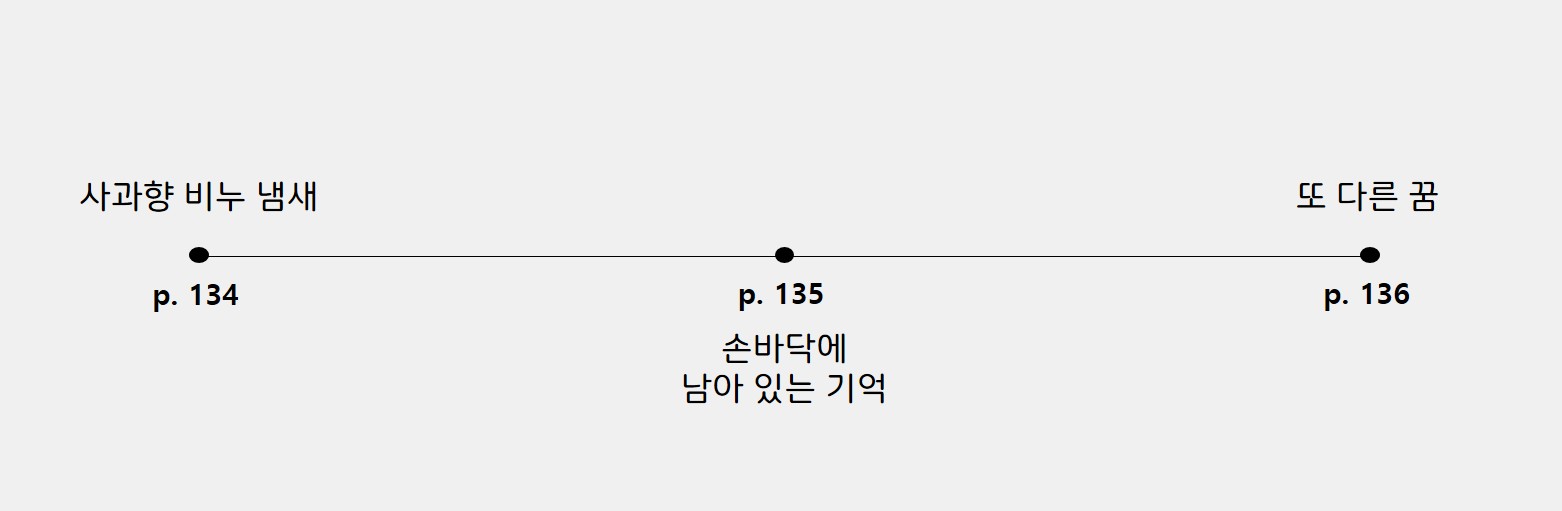
여자의 사과향 비누 냄새를 맡으며 잠에 빠져들고 있는 남자는 어떤 꿈을 꿀까요? 

이어지는 이야기를 영어 번역서 136페이지에서 읽어 보세요.

혹은 다음 음원의 지난 이야기를 들어 보세요. 

p. 134, 1번째 줄, He opens.. ~ p. 136, 끝에서 4번째 줄, ..a sound.’ 

어휘 찾아보기

♪ 표시는 <낭송에 나온 어휘>입니다.  

1. 어휘 리듬 연습 음원과 함께 오늘 <낭송에 나온 어휘>들을 연습해보세요.

2. 🔊스피커 버튼을 눌러 단어 별 소리를 들어볼 수 있습니다.

Copyright 쉬다이닝(잉글리쉬다이닝) 원서의 하루 All rights reserved

음원과 정리 페이지의 저작권은 쉬다이닝(잉글리쉬다이닝)에 있습니다. 허락없이 녹음, 녹화 하거나 파일을 유포할 경우 민형사상으로 고소 고발될 수 있습니다.

음원과 정리 페이지는 원서의 저자 또는 출판사의 별도 허가를 받아 인용 허용 범위 안에서 제작된 것입니다. 이를 임의로 편집하여 타인에게 유무료로 배포하거나 강의할 수 없습니다.